6 Ways To Figure Out What You Want In A Job
One of the most common questions I hear from job seekers and career changers is how to figure out what they want to do next. Let's face it, this kind of insight doesn't grow on trees. Sooner or later, most of us need a little help to clarify our job options and redirect our long-term career plans.
Related: 5 Dynamic Ways To Reinvent Your Career Path
Before considering how to figure out what you want in a job, let's first delineate what you need to know about a job in order to evaluate it as a potential match.
You need to know what level of role it is (professional, management, executive, and so on), the scope of the position (its key functions and responsibilities), the industry(ies) in which it can be found, and the types of companies that hire people to do that work. This is the level of clarity needed to apply for jobs, write resumes, and perform effectively interviews and is part of the process of defining a realistic job search strategy.
If you have deeper questions about what kind of work, you should be doing or think you may need to change careers altogether, then you will find it helpful to dig deeper. For this deeper career excavation, you will need to identify your personal meaning and pleasure indicators as well as your strongest skills. Of these three, your skills are usually the easiest to identify because they are the most obvious. Most of us can fairly quickly identify at least some of the things we're good at doing.
If you need more help discovering your most important skills, you may want to consider completing a skills identification exercise. Career pleasures, or likes, are easy to identify for those occupations and fields you're aware of but next to impossible to clarify if your awareness of career fields is limited – which is exactly why career assessments can be helpful.
A career coach can be a great ally in this process, too, since an experienced one can shortcut your research and exploration dramatically by showing you possible life directions based on the patterns of your likes and dislikes. Career meaning is the toughest of these three to identify on your own, though values assessments can point the way. Reflecting on the career choices you've made to date can streamline your exploration and aid you in focusing on the career options most likely to be of value to you.
The intersection of these three elements is the classic career satisfaction goal because ultimately a great career choice is one that creates meaning for you, gives you deep pleasure, and takes advantage of your strongest skills. So, how can you figure out what you're looking for career-wise? There are six primary pathways to career clarity. Which ones are best suited to your personality, timeline, and budget?
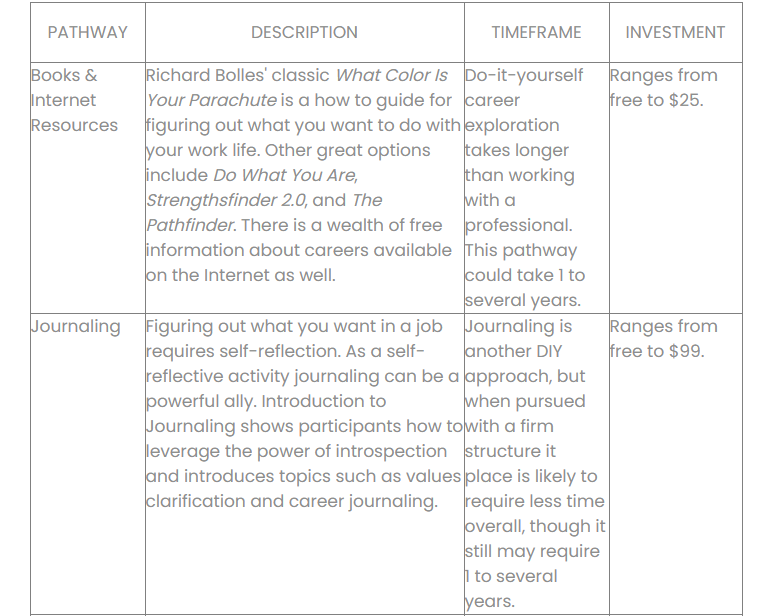
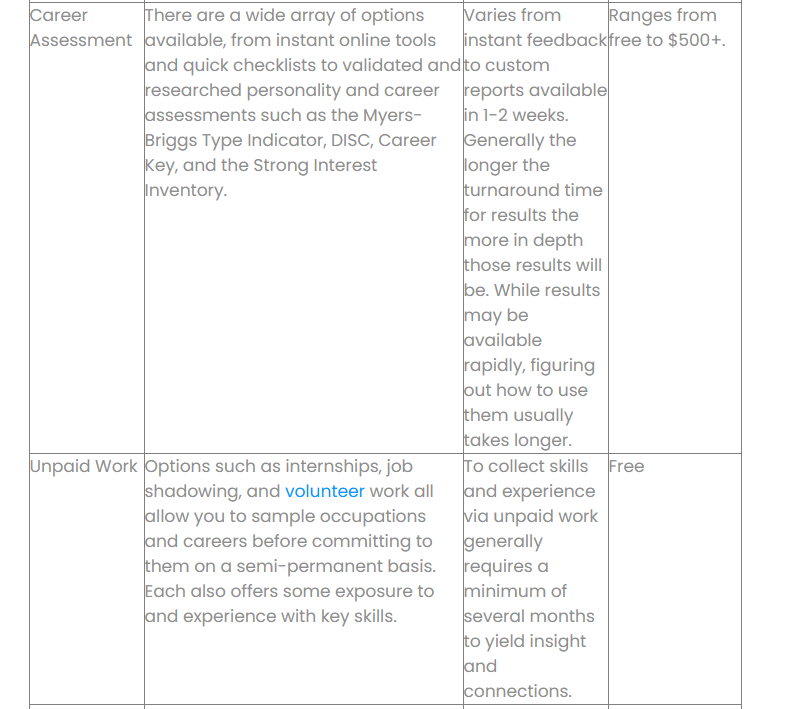
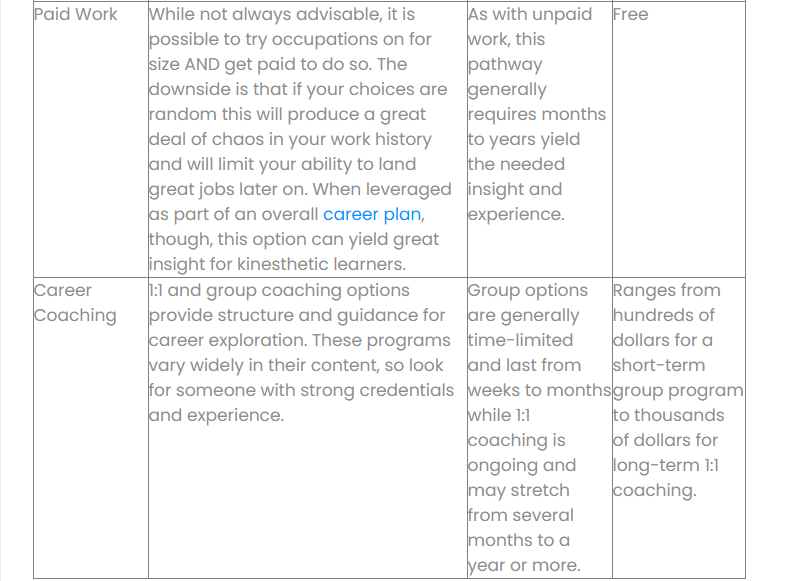
Although you can leverage full-time work as a means to figuring out your overall career trajectory, this option is really the costliest of the six pathways. I've seen many professionals who kept trying different career options by landing different jobs in different industries over a period of several years. The problem is that this many job changes creates chaos in the resume and makes landing a great job much harder to do.
That is why, if your budget allows, working with a career coach will likely yield greater insight and momentum than pursuing career exploration on your own. Many coaches offer group programs that give you a structured program, accountability, and direction at a fraction of the cost of working with a coach 1:1.
This post was originally published at an earlier date.
Related Posts
5 Signs You Chose The Wrong Career Path 9 Ways To Be Happy In Job You Don't Like Want Career Happiness? Identify Your Top 5 Desires
About the Author
A 15-time, award-winning resume writer, Cheryl Lynch Simpson serves mid-career to senior executives as a credentialed resume writer (ACRW), LinkedIn strategist (COPNS), and Get Clear, Get Found, Get Hired (G3) coach. Like her advice? Check out her website, ExecutiveResumeRescue.com for a complimentary copy of her popular Polish Your Profile LinkedIn presentation, or follow her on Twitter!
Disclosure: This post is sponsored by a CAREEREALISM-approved expert.